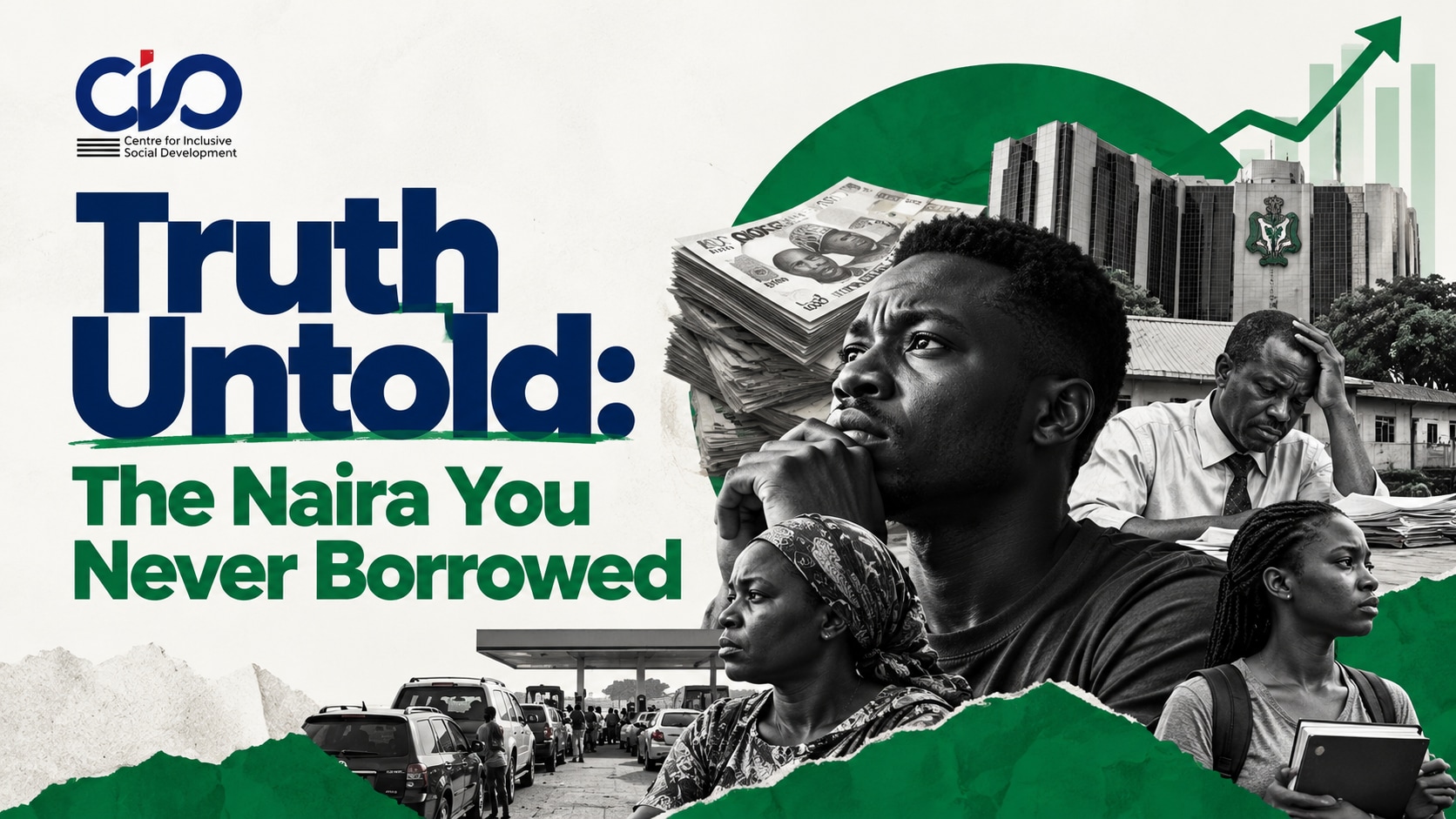
Based on the latest debt figures, it is clear that the average Nigerian is deeply in debt, even though none ever signed a loan agreement.
The mother rationing fuel at a filling station queue, the civil servant whose monthly salary buys less each week, the small trader facing unpredictable exchange rates, and the student whose daily allowance can barely stretch into tomorrow. None of them have ever sat across a negotiation table from London bondholders or Abu Dhabi sovereign wealth funds. Yet it is everyday citizens who pay this debt unnoticed through higher bus fares, rising hospital bills, and the constantly escalating price of a bag of rice.
There would be little complaint if the public were fully informed about how much the country owes, what those funds were used for, and how repayments were structured; given that clarity, citizens could plan and adapt accordingly.
The Numbers We See, and the Liabilities We Don't
Ask the Debt Management Office (DMO) how much Nigeria owes, and it will present a tidy number delivered every quarter with the calm precision of an institution that has nothing to hide.
Ask a different question: ask who actually owes what, to whom, and why entire categories of financial obligations never appear on that balance sheet, and that calm quickly evaporates.
The real issue with Nigeria's public debt statistics is not simply a miscalculated headline number. Rather, critical financial liabilities are left out entirely, including unpaid contractor bills, state-owned enterprise debts, legacy pension obligations, and contingent government guarantees.
While these items never show up in official headline debt metrics, each one constitutes a legal and economic debt. The published totals reflect a metric that was never designed to be complete, maintained by a system with little incentive to make it comprehensive.
For instance, official debt figures published in early 2026 stood at N159.35 trillion, reflecting a slight N75.51 billion uptick from the previous quarter, a marginal movement that appears to signal fiscal discipline.
In dollar terms, however, that figure shifted more noticeably from $110.97 billion to $114.95 billion.
Between the numbers the government officially releases and what the nation actually owes lies an uncounted shadow ledger where the true fiscal realities of Nigerian life reside.
The Crude Oil Commitments Outside the Ledger
The most striking example of these omissions is the forward sale of unpumped crude oil.
Under arrangements like Project Gazelle, a fixed volume of future crude production initially set at 90,000 barrels per day was pledged to an offshore special purpose vehicle registered in the Bahamas in exchange for immediate upfront cash.
Stripped of complex financial terminology, this arrangement operates as a loan repaid in crude oil barrels rather than naira, structured through an offshore entity so that it remains absent from standard debt disclosures.
While the government accesses immediate liquidity, everyday citizens, from fishermen in Bayelsa to traders in Onitsha, continue to bear the cost of elevated fuel prices long after those pledged oil barrels have been spent.
The central question is not merely whether such arrangements are legally permissible, but why citizens were informed only after the commitments were finalised.
The Central Bank Overdrafts
A similar pattern appears at the Central Bank of Nigeria (CBN).
Section 38 of the CBN Act strictly caps emergency government overdrafts at five per cent of the previous year's revenue, mandating repayment within the same fiscal year to safeguard currency stability.
For years, successive administrations exceeded this statutory limit, rolling over the accumulated balances off the books until they could no longer be contained.
Approximately N22.7 trillion in overdrafts accumulated before being securitised into official debt in 2023, followed by an additional N7.3 trillion absorbed shortly after.
Had these funds been transparently deployed, N30 trillion could have financed vital healthcare infrastructure, educational facilities, or power grid upgrades.
Instead, it remained an unrecorded monetary figure until fiscal pressures forced its inclusion in the national debt tally without formal public accounting.
The Liabilities Across State Institutions
This lack of comprehensive tracking extends across state institutions.
The Nigerian National Petroleum Company Limited (NNPCL), despite its commercial restructuring, incurs liabilities to joint-venture partners and suppliers that remain outside national debt figures, even as industry audits by NEITI indicate the oil sector owes the Federation billions in unpaid royalties and levies.
Likewise, scattered contractor and supplier arrears across federal and state ministries represent real debt obligations under standard accounting principles, yet remain uncounted due to the absence of a unified reporting framework.
Together, these gaps point to a reporting architecture that leaves politically sensitive liabilities outside public view.
Who Ultimately Pays the Price?
Ultimately, this hidden system fails to serve citizens, who bear the burden of unrecorded liabilities, or lawmakers, who must deliberate on debt figures they cannot fully verify.
Instead, it allows successive administrations to defer the political costs of high indebtedness, passing those accumulated obligations to future leadership and upcoming generations of citizens.
The Case for a Transparent Debt Ledger
Until Nigeria establishes a fully transparent, comprehensive debt ledger, public debt statistics will remain an incomplete record balancing convenient metrics while leaving real obligations in the shadows.
Every unrecorded overdraft, offshore crude arrangement, and uncounted contractor bill reflects a choice to delay transparency, even as the ultimate bill continues to fall on the public.
The Centre for Inclusive Social Development (CISD) is a non-profit research and advocacy organisation working to advance inclusive governance, gender and social equity, civic technology, and sustainable livelihoods across Nigeria and sub-Saharan Africa. Through rigorous research, coalition-building, and public-interest storytelling, CISD amplifies the voices of marginalised communities and holds power accountable.
Learn more at cisdnigeria.org or follow us on social media.
How to cite this article
Akpabot Bright. (2026, October 14). Truth Untold: The Naira You Never Borrowed. CISD Insights. Centre for Inclusive Social Development. Retrieved from https://cisdnigeria.org/article/truth-untold-the-naira-you-never-borrowed/.