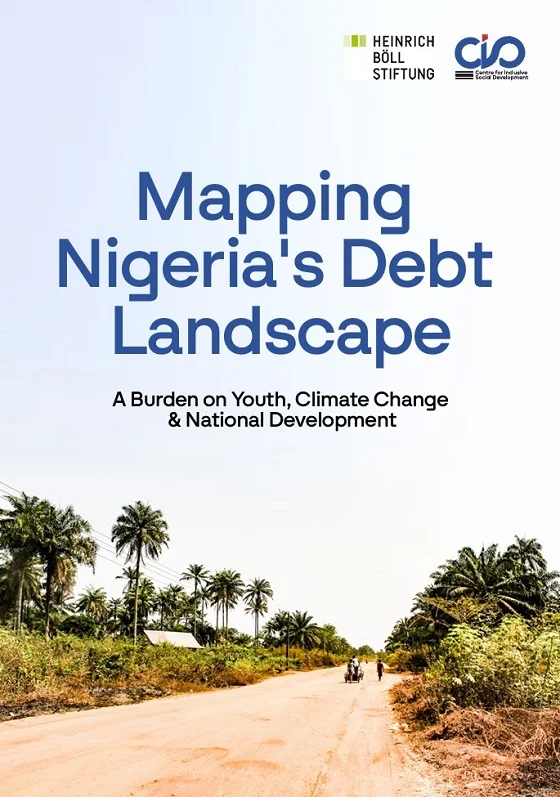
Amid the growing debate, the Centre for Inclusive Social Development (CISD) on Thursday launched a new report examining the implications of Nigeria’s debt trajectory for young people, climate action, and inclusive development.
The report highlights widening gaps between public borrowing and measurable social outcomes, warning that weak accountability and opaque spending practices are undermining the developmental impact of debt.
The rise in public debt has come under renewed scrutiny as new budget proposals, expert assessments, and civil society interventions raise questions about who benefits from the country’s growing borrowing, and who ultimately bears the cost.
The Federal Government, in its 2026 budget plan, said it would borrow about ₦17.89 trillion because it expects to earn less money than planned. If this borrowing goes ahead, Nigeria’s total debt will rise above $150 billion. This has raised concerns that the country is taking on more loans without seeing clear improvements in people’s lives, such as better jobs, services, or infrastructure.
Recent media reports and expert analyses warn that debt servicing is consuming an increasing share of government revenue, leaving limited fiscal space for priority sectors such as education, healthcare, youth employment, and climate resilience. Analysts argue that while borrowing is often presented as a necessary response to revenue shortfalls, Nigeria’s current debt profile shows little evidence of improved living standards or structural economic transformation.
“This is no longer just a fiscal issue; it is a generational one,” the report notes, pointing out that rising debt obligations risk shifting the burden of repayment to young Nigerians without delivering commensurate investments in education, skills, decent work, or social protection.
Youth advocates have echoed these concerns, noting that, with more than half of Nigeria’s population under 30, current borrowing decisions could shape economic opportunities for decades. Persistent unemployment and underemployment, they argue, are already eroding trust in public institutions and weakening the social contract.
The report also highlights Nigeria’s climate vulnerability. Despite increasing debt levels, climate adaptation and mitigation remain underfunded, even as communities face worsening floods, food insecurity, and environmental degradation. CISD’s analysis raises questions about how climate-related loans and development financing are tracked, implemented, and evaluated.
DOWNLOAD FULL REPORT HERE
“There is a growing disconnect between borrowing in the name of development and outcomes on the ground,” a civil society representative said during the report’s launch. “Debt should strengthen resilience and protect vulnerable populations, not deepen existing inequalities.”
CISD called for stronger legislative oversight, improved public access to debt data, and clearer links between borrowing and development results. The organisation also urged policymakers to prioritise inclusive budgeting processes that centre young people and climate-affected communities.
As debates over the 2026 budget continue, analysts insist that Nigeria must move beyond discussions about how much it can borrow to harder questions about effectiveness, accountability, and long-term impact. For millions of young Nigerians and communities already at risk, the answers could define the country’s development path for years to come.
The Centre for Inclusive Social Development (CISD) is a non-profit research and advocacy organisation working to advance inclusive governance, gender and social equity, civic technology, and sustainable livelihoods across Nigeria and sub-Saharan Africa. Through rigorous research, coalition-building, and public-interest storytelling, CISD amplifies the voices of marginalised communities and holds power accountable.
Learn more at cisdnigeria.org or follow us on social media.
How to cite this article
Sadiya Mukhtar. (2025, December 12). Nigeria’s Rising Debt Raises Fresh Concerns Over Youth Futures, Climate Action, Others. CISD Insights. Centre for Inclusive Social Development. Retrieved from https://cisdnigeria.org/article/nigerias-rising-debt-raises-fresh-concerns-over-youth-futures-climate-action-others/.