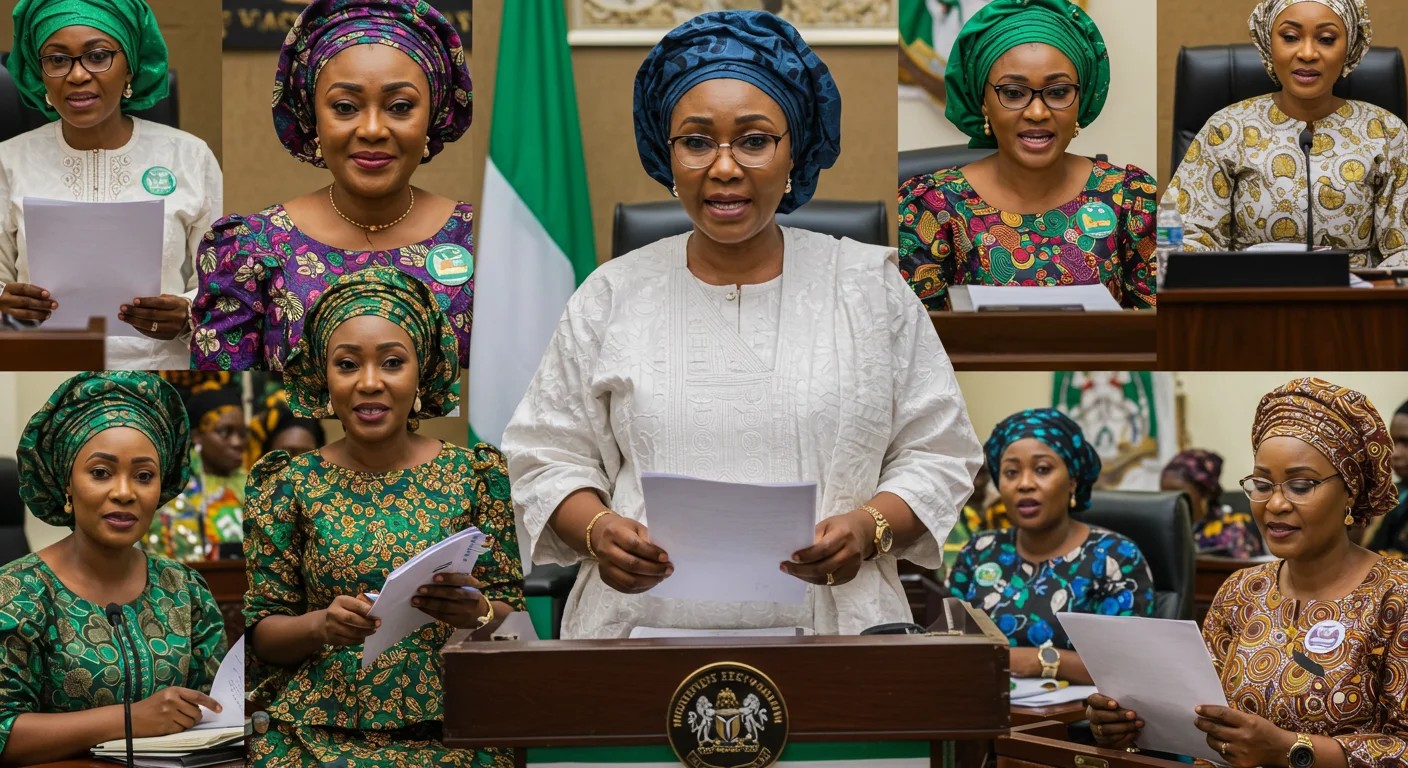
As the world gears up to celebrate International Women's Day on March 8, 2025, the spotlight turns to the remarkable yet underrepresented force of Nigerian women in politics. Women make up nearly half of Nigeria's estimated 220 million people, yet their voices in the corridors of power remain a whisper compared to their potential roar.
The Current Landscape: Progress or Not?
Men have long dominated Nigeria's political landscape, but women are increasingly stepping forward to claim their space. However, progress remains slow. In the 2023 general elections, women comprised just 10% of the 15,307 candidates contesting across 18 political parties. Despite their efforts, only 78 women secured electoral victories, translating to a mere 5.2% success rate.
The representation of women in the National Assembly remains alarmingly low. Women now hold just 3% of Senate seats—a sharp decline from 7.34% in 2019—while their presence in the House of Representatives stands at only 4%, a slight increase from the previous 3.4%. This places Nigeria among the bottom five countries globally for women's parliamentary representation, falling far below sub-Saharan Africa's regional average of 27%.
The Challenges: A Fortress of Barriers
Why does Nigeria, a vibrant democracy with near gender parity in voter registration, lag so dramatically in women's political representation? The answer lies in a fortress of systemic, cultural, and institutional barriers.
Patriarchal Norms and Societal Biases: Deep-rooted cultural beliefs—reinforced by traditional and religious practices—cast women as homemakers rather than leaders. "Men feel women are meant to be seen and not heard," says Joy Ada Onyesoh, National Coordinator of Nigeria's Women Situation Room. This mindset permeates political parties, where women are often sidelined in favour of male candidates deemed more "electable."
Financial Hurdles: Politics in Nigeria is an expensive game. The cost of nomination forms, campaign logistics, and voter outreach can run into millions of naira. For instance, in 2023, the ruling All Progressives Congress (APC) set presidential nomination fees at 30 million naira (about $67,269), a steep barrier for most aspirants—especially women, who often lack access to the same financial networks as their male counterparts.
Violence and Harassment: Political violence is a grim reality for women candidates. From intimidation during primaries to online smear campaigns, the risks are daunting. Funke Akindele, a 2023 Lagos State gubernatorial candidate, faced vicious attacks on her personal life, with opponents weaponising her divorce to undermine her candidacy. The Centre for Democracy and Development (CDD) notes that such hostility deters many women from entering the fray.
Party Gatekeeping: Major parties like the APC and PDP talk a big game about gender inclusion, but their actions fall short. In the 2023 primaries, seven women contested for presidential tickets across various parties, yet none secured a spot on the final ballot from the dominant players. Smaller parties, like the ADP, show more promise, fielding women at higher rates, but their limited influence keeps female voices on the margins.
Rising Above: Stories of Resilience
Despite these odds, Nigerian women are rewriting the narrative with grit and grace. Historical icons like Funmilayo Ransome-Kuti, a firebrand who fought for women's rights in the pre-independence era, laid the groundwork. Today, trailblazers like Ngozi Okonjo-Iweala, Nigeria's first female Finance Minister and now WTO Director-General, inspire a new generation. In 2025, women like Adewunmi Oriyomi Onanuga, Chair of the House Committee on Women Affairs, are pushing for legislative reforms to amplify female voices.
At the grassroots, young women are harnessing digital platforms to mobilise support. Social media campaigns like #FemaleInNigeria and #ElectHER are galvanising communities, challenging stereotypes, and building networks of mentorship and funding.
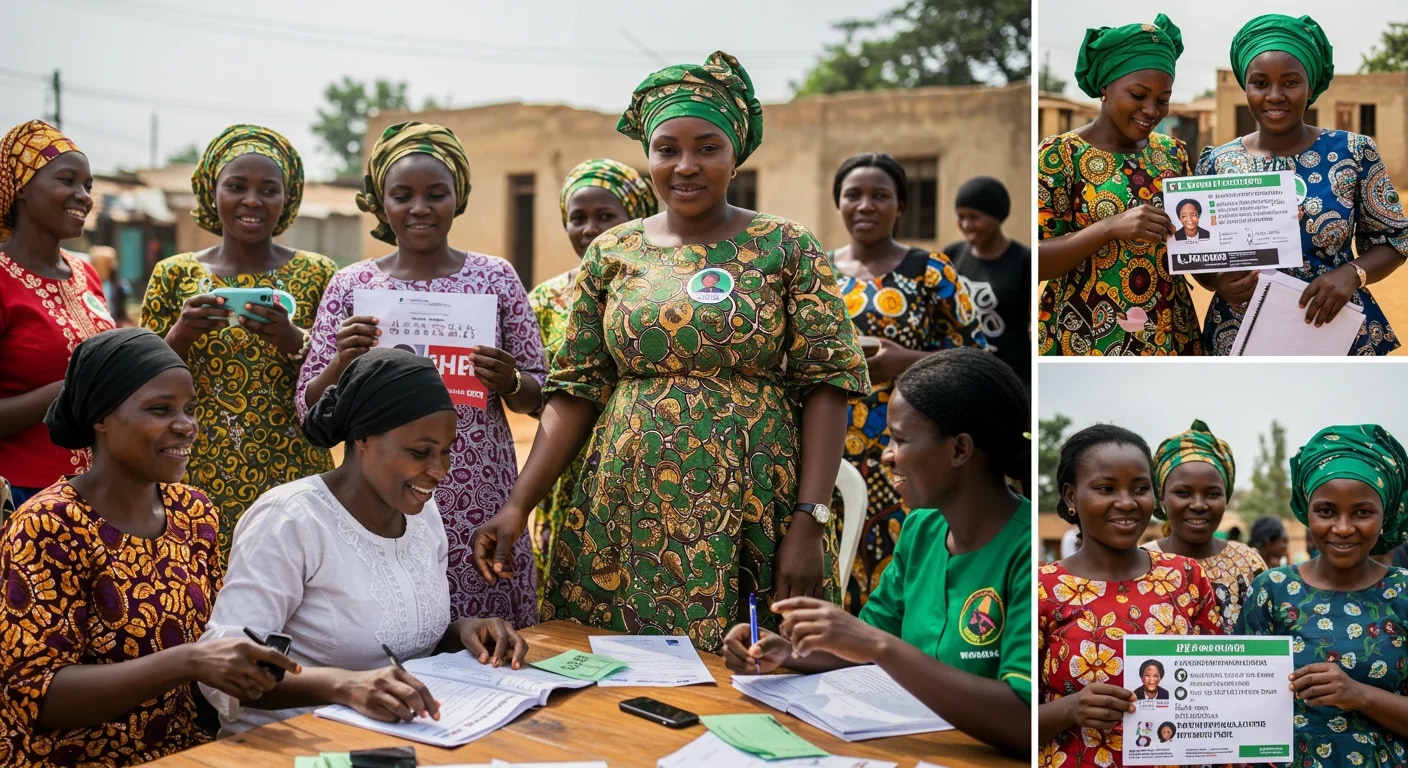
Nigerian women engaging in political advocacy and grassroots mobilization, representing the new generation of female leaders breaking barriers in politics through both traditional and digital platforms.
Solutions: A Roadmap to Equality
Closing Nigeria's gender gap in politics demands bold, actionable steps:
Quotas and Electoral Reforms: Nigeria can learn from its African counterpart, Rwanda, where women hold over 60% of parliamentary seats thanks to a constitutional quota system. Nigeria's National Gender Policy calls for 35% affirmative action but remains unenforced. Passing the Gender and Equal Opportunities Bill—languishing since 2016—could mandate quotas, compelling parties to field more women.
Mentorship and Training: Programs like those run by UN Women, which trained 50 young women in 2018 (three of whom won party nominations), prove the power of capacity-building. Scaling these initiatives nationwide could equip women with the skills, confidence, and networks to compete.
Tackling Violence: Stronger laws and enforcement against political harassment are non-negotiable. The Women Situation Room's toll-free hotline, monitoring gender-based violence during elections, is a start—now it needs teeth through prosecution and public condemnation.
Public Awareness: Shifting societal norms requires a cultural revolution. Media campaigns showcasing women leaders—like Senegal's 40% female parliament—could dismantle sexist prejudices, as the UNDP's Gender Social Norms Index shows that nearly 90% of people globally still harbour such biases.
The Stakes: Why It Matters
The World Economic Forum predicts it will take 131 years to close the global gender gap at current rates. For Nigeria, the stakes are higher: projections suggest that gender parity could boost GDP by 9% by 2025. Beyond economics, women in politics bring unique perspectives—think gender-responsive policies on healthcare, education, and security, areas where Nigeria desperately needs progress.
A bird never flies on one wing. We need men and women at the decision-making table for sustainable peace and development.
Looking Ahead: A Call to Action
As we celebrate the International Women's Day 2025, Nigeria stands at a crossroads. The momentum of 2023's elections and the promise of 2027's contests signal a shift—but it's not enough. The underrepresentation of women in politics isn't just a women's issue; it's a national imperative. By dismantling barriers, amplifying voices, and embracing bold reforms, Nigeria can lead Africa toward a future where women don't just participate—they shape the destiny of a nation.
◆ ◆ ◆
The Centre for Inclusive Social Development (CISD) is a non-profit
research and advocacy organisation working to advance inclusive governance, gender and
social equity, civic technology, and sustainable livelihoods across Nigeria and sub-Saharan
Africa. Through rigorous research, coalition-building, and public-interest storytelling,
CISD amplifies the voices of marginalised communities and holds power accountable.
Learn more at cisdnigeria.org
or follow us on social media.
Adebayo Toyosi.
(2025, August 19).
Nigerian Women in Politics: Breaking Barriers, Shaping Futures.
CISD Insights. Centre for Inclusive Social Development.
Retrieved from https://cisdnigeria.org/article/nigerian-women-in-politics-breaking-barriers-shaping-futures-24/.