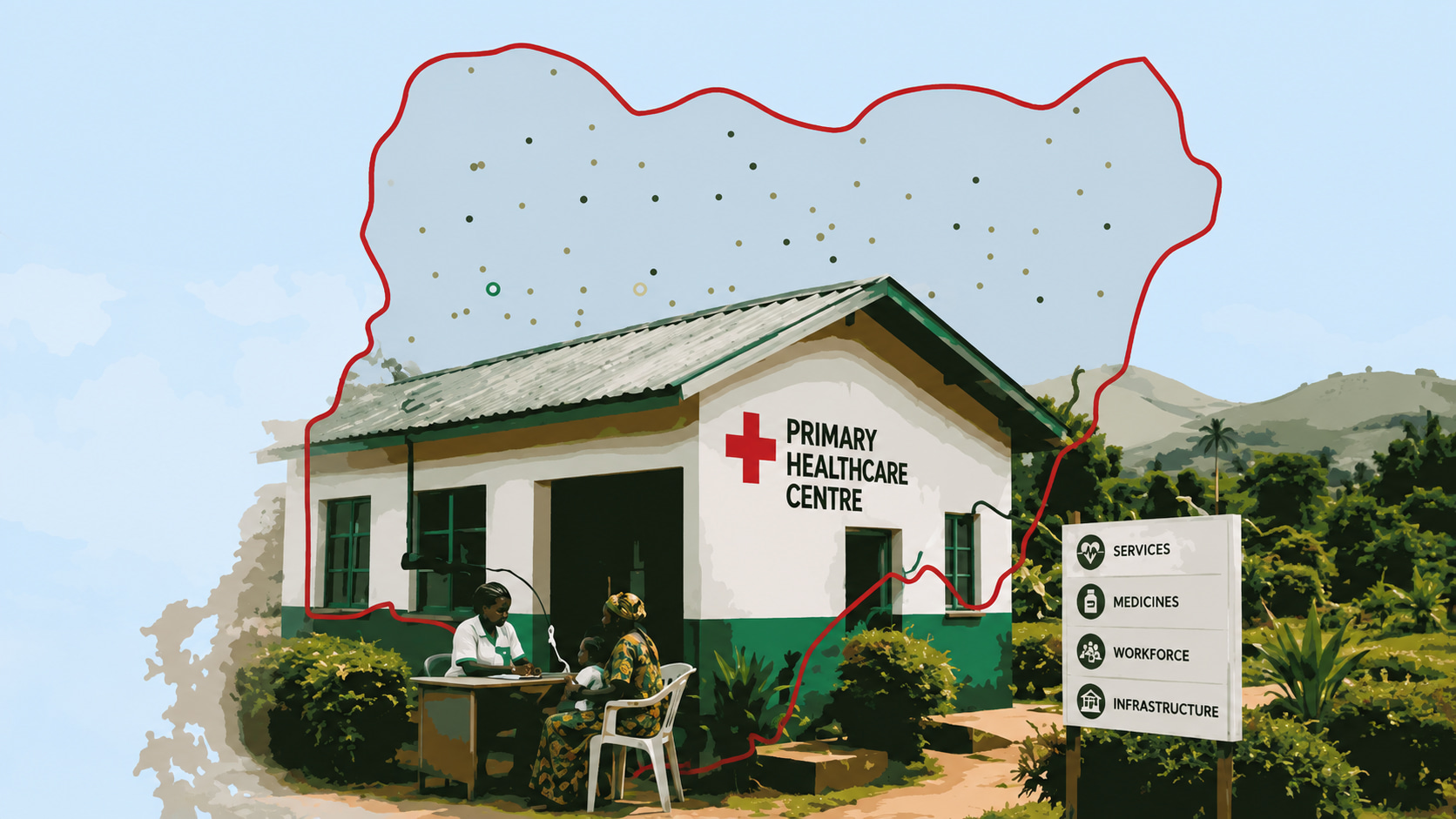
Primary healthcare (PHC) is the foundation of every effective health system. It is the first place many Nigerians turn to when a child develops a fever, a pregnant woman needs antenatal care, or a family requires routine medical services. On paper, Nigeria has built one of the largest primary healthcare networks in Africa, with 26,711 facilities spread across all 36 states and the Federal Capital Territory.
Yet, beneath these impressive numbers lies a troubling reality.
A new data-driven report by the Centre for Inclusive Social Development (CISD), The State of Primary Healthcare in Nigeria, reveals that access to healthcare is not simply about the number of facilities available. It is about whether those facilities are functional, adequately staffed, properly equipped, and capable of delivering quality care.
The Numbers Behind the Network
Of Nigeria's 26,711 registered PHC facilities, only 20,206 are currently operational. This means that more than 6,500 facilities—nearly one in every four—are not providing services to communities that depend on them.
The report also highlights significant disparities across regions and states. While some states maintain operational rates above 95 percent, others have more than half of their facilities non-functional. These differences point not only to resource challenges but also to gaps in governance, oversight, and health sector management.
Beyond Buildings: The Quality Gap
The existence of a health facility does not automatically guarantee access to quality healthcare.
According to national standards, every ward in Nigeria should have at least one fully equipped Level 2 Primary Healthcare Centre capable of providing comprehensive services, including skilled birth attendance, laboratory testing, essential medicines, and routine immunisation. However, Nigeria currently has only 3,128 Level 2 PHCs for its 9,565 wards. This leaves 6,437 wards without the standard facility required to adequately serve their populations.
The implication is clear: millions of Nigerians may live near a clinic, yet still lack access to the quality healthcare services they need.
Why This Matters
Healthcare statistics are ultimately about people.
When a PHC is closed, a pregnant woman may travel further for delivery. When a facility lacks essential services, a child may miss life-saving treatment. When communities have access only to under-equipped centres, preventable illnesses become more dangerous and costly.
The report demonstrates that Nigeria's challenge is not only expanding healthcare infrastructure but ensuring that existing facilities are functional, accessible, and capable of delivering quality care.
Data for Accountability
The findings underscore the importance of evidence-based policymaking and public accountability. Citizens, civil society organisations, policymakers, and development partners must move beyond counting facilities to asking deeper questions:
- Are PHCs operational?
- Do they have qualified health workers?
- Are medicines and essential equipment available?
- Are communities receiving the healthcare they deserve?
Only by answering these questions can Nigeria strengthen its primary healthcare system and move closer to achieving universal health coverage.
Download the Full Report
The full report provides a comprehensive state-by-state analysis of Nigeria's primary healthcare landscape, including operational status, regional disparities, Level 2 PHC coverage, and critical insights for policymakers and citizens.
The Centre for Inclusive Social Development (CISD) is a non-profit research and advocacy organisation working to advance inclusive governance, gender and social equity, civic technology, and sustainable livelihoods across Nigeria and sub-Saharan Africa. Through rigorous research, coalition-building, and public-interest storytelling, CISD amplifies the voices of marginalised communities and holds power accountable.
Learn more at cisdnigeria.org or follow us on social media.
How to cite this article
Job Olaniran. (2026, June 15). The State of Primary Healthcare in Nigeria: A Network That Exists, But Does It Work?: The State of Primary Healthcare in Nigeria, reveals that access to healthcare is not simply about the number of facilities available. It is about whether those facilities are functional.... CISD Insights. Centre for Inclusive Social Development. Retrieved from https://cisdnigeria.org/article/the-state-of-primary-healthcare-in-nigeria-a-network-that-exists-but-does-it-work/.