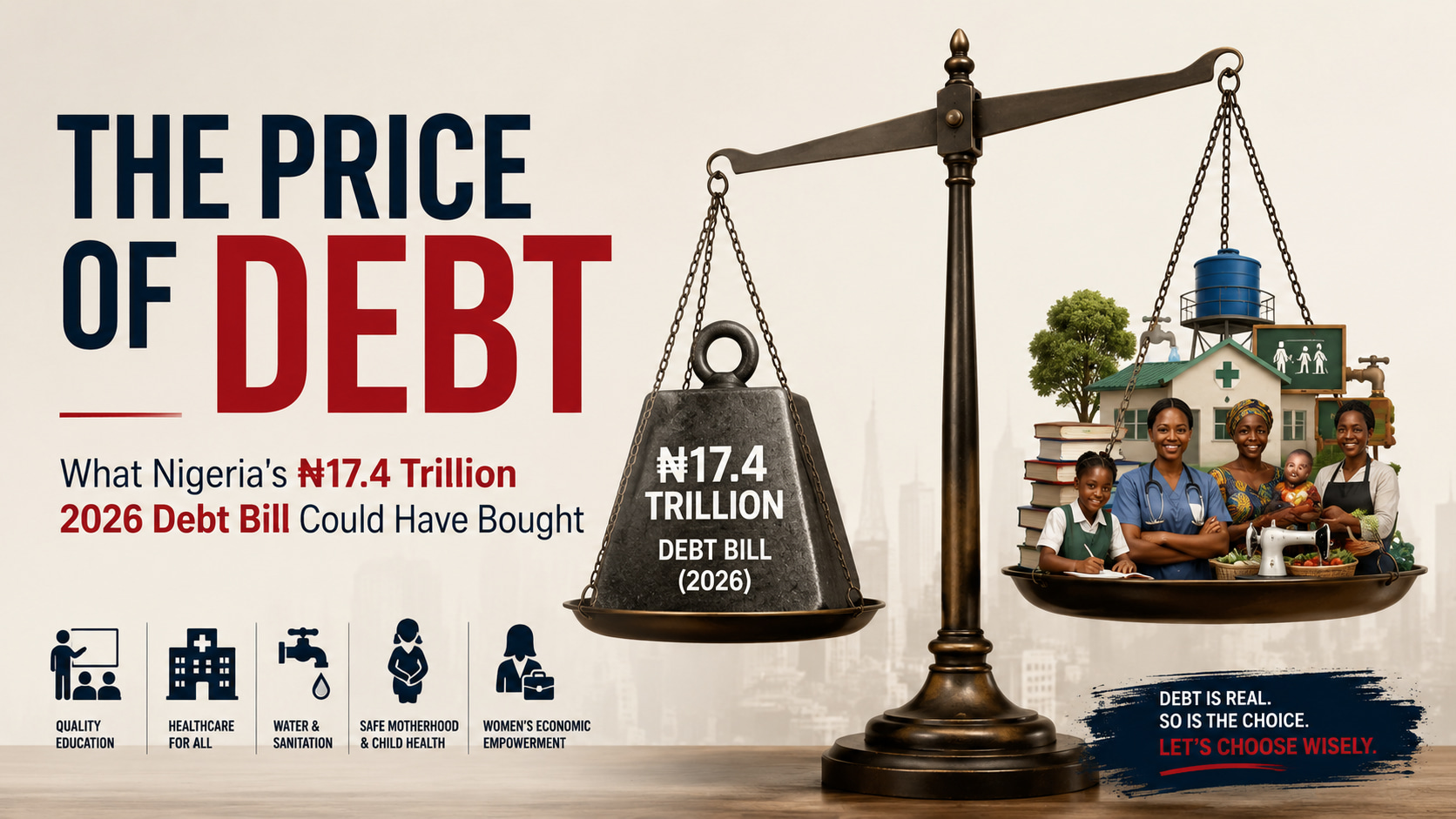
For many Nigerians, debt is just another figure in the national budget. But what if that same amount represented classrooms for every out-of-school child, functioning primary healthcare centres, safe childbirth for millions of women, clean water for underserved communities, and financing for women-owned businesses?
In its latest research brief, The Price of Debt, the Centre for Inclusive Social Development (CISD) examines the opportunity cost of Nigeria's projected ₦17.4 trillion 2026 debt-service bill, asking a simple but powerful question: What social investments are forgone when more than half of federal revenue goes to servicing debt?
Using publicly available data from institutions including the IMF, UNICEF, the NHIA, the World Bank, the National Demographic and Health Survey, and the Rural Electrification Agency, the report develops a one-year opportunity-cost model comparing the debt-service bill with the cost of closing some of Nigeria's most pressing social-sector gaps. The analysis finds that approximately ₦17.44 trillion—almost identical to the projected debt-service bill—could fund a package of investments spanning education, healthcare, water and sanitation, and women's economic empowerment.
Among the report's findings:
- Nigeria's projected ₦17.4 trillion debt-service obligation represents 53.7% of expected federal revenue, meaning more than half of every naira collected goes to interest payments before public services are delivered.
- The same amount could finance classrooms, teachers, and learning materials for millions of out-of-school children; rebuild and revitalise thousands of primary healthcare centres; expand health insurance coverage; improve maternal and child health outcomes; provide safe water and sanitation; and establish an enterprise-finance fund reaching 5 million women entrepreneurs.
- The report also highlights that women and girls would receive the largest share of the social benefits, making the debt burden not only a fiscal issue but also a gender and development issue.
Importantly, the research does not argue that debt obligations should simply be abandoned. Instead, it presents an opportunity-cost framework that helps policymakers and citizens understand the scale of the choices involved in fiscal policy and the social trade-offs that accompany rising debt-service commitments.
Fiscal policy is ultimately about choices. By translating large budget figures into tangible social outcomes, The Price of Debt encourages a more informed conversation about public spending, national priorities, and inclusive development.
Download the Full Research Brief
The summary only scratches the surface. The full report provides the complete methodology, data sources, assumptions, and detailed breakdown of each social-sector investment model.
The Centre for Inclusive Social Development (CISD) is a non-profit research and advocacy organisation working to advance inclusive governance, gender and social equity, civic technology, and sustainable livelihoods across Nigeria and sub-Saharan Africa. Through rigorous research, coalition-building, and public-interest storytelling, CISD amplifies the voices of marginalised communities and holds power accountable.
Learn more at cisdnigeria.org or follow us on social media.
How to cite this article
Tobechukwu Ezeuko. (2026, July 28). The Price of Debt: What Nigeria's ₦17.4 Trillion Debt Bill Could Have Bought: What does ₦17.4 trillion really look like?. CISD Insights. Centre for Inclusive Social Development. Retrieved from https://cisdnigeria.org/article/the-price-of-debt-what-nigerias-174-trillion-debt-bill-could-have-bought/.