Nigeria's debt conversation is often dominated by figures: how much governments owe, how much they borrow, and how much they spend on debt service.
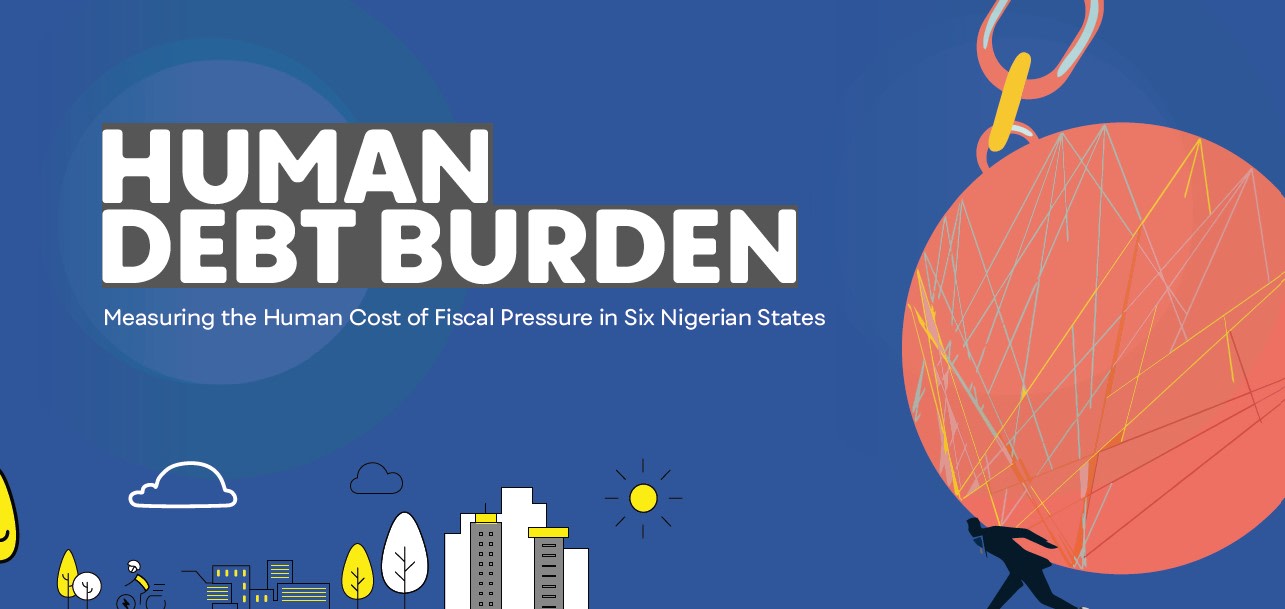
The Human Debt Burden report shifts the lens from the treasury to the people.
Produced under CISD's True Cost of Debt Programme, the report examines how fiscal pressure affects the ability of state governments to fund the services citizens depend on, including healthcare, education and basic infrastructure. It analyses four years of fiscal data from 2022–2025, alongside multidimensional poverty, primary healthcare and out-of-school children data across Adamawa, Benue, Enugu, Kaduna, Ogun and Rivers. The study introduces what it describes as Nigeria's first state-level Human Debt Burden Index.
The central question
When a state government pays its debt before it pays for schools, hospitals and infrastructure, who bears the real cost?
The report finds that debt pressure is not simply a fiscal challenge. In states experiencing the highest fiscal pressure, it is closely connected to constraints on human development. The evidence shows that states with greater fiscal pressure also experience deeper multidimensional poverty and significant gaps in service delivery.
What the evidence reveals
- Kaduna has the highest debt-to-revenue ratio in the study at 2.34x, with 92.1% of its debt external.
- Benue paid ₦69.9 billion in debt service in 2025, compared with ₦57.1 billion spent on education and health combined.
- In Adamawa, 36% of primary healthcare facilities were non-operational and 30% of primary school-age children were out of school.
- Rivers and Enugu recorded the lowest human debt burden in the study, demonstrating that the debt-deprivation spiral is not inevitable and that fiscal structure and revenue capacity matter.
- Across the six states, health budget execution ranged from 26% to 84%, highlighting the gap between what governments allocate and what ultimately reaches frontline services.
But the report goes beyond the numbers.
It asks us to consider debt in terms of foregone clinics, absent teachers, non-functional facilities and opportunities lost by citizens. In other words, the true cost of debt is ultimately experienced in people's everyday lives.
From evidence to action
The report concludes that managing debt cannot be separated from human development. Its policy recommendations include establishing state-level debt sustainability frameworks, setting limits on debt-service burdens and linking new borrowing in high-burden states to demonstrated improvements in human development outcomes.
The findings also show that fiscal strength alone is not enough. Rivers, for example, has the largest revenue base and lowest debt-service burden among the six states, yet 59% of its PHC facilities are non-operational. This points to the importance of governance, accountability and effective deployment of public resources.
Read the Full Report
Human Debt Burden offers a new way to understand Nigeria's subnational debt crisis: not simply by asking how much states owe, but by asking what citizens are losing when fiscal pressure shapes public spending.
Download the full report to explore the data, state-by-state profiles, Human Debt Burden Index, findings and policy recommendations.
The Centre for Inclusive Social Development (CISD) is a non-profit research and advocacy organisation working to advance inclusive governance, gender and social equity, civic technology, and sustainable livelihoods across Nigeria and sub-Saharan Africa. Through rigorous research, coalition-building, and public-interest storytelling, CISD amplifies the voices of marginalised communities and holds power accountable.
Learn more at cisdnigeria.org or follow us on social media.
How to cite this article
Rasaq Kareem. (2026, August 20). Measuring the Human Cost of Fiscal Pressure in Six Nigerian States: What does public debt actually cost citizens?. CISD Insights. Centre for Inclusive Social Development. Retrieved from https://cisdnigeria.org/article/measuring-the-human-cost-of-fiscal-pressure-in-six-nigerian-states/.