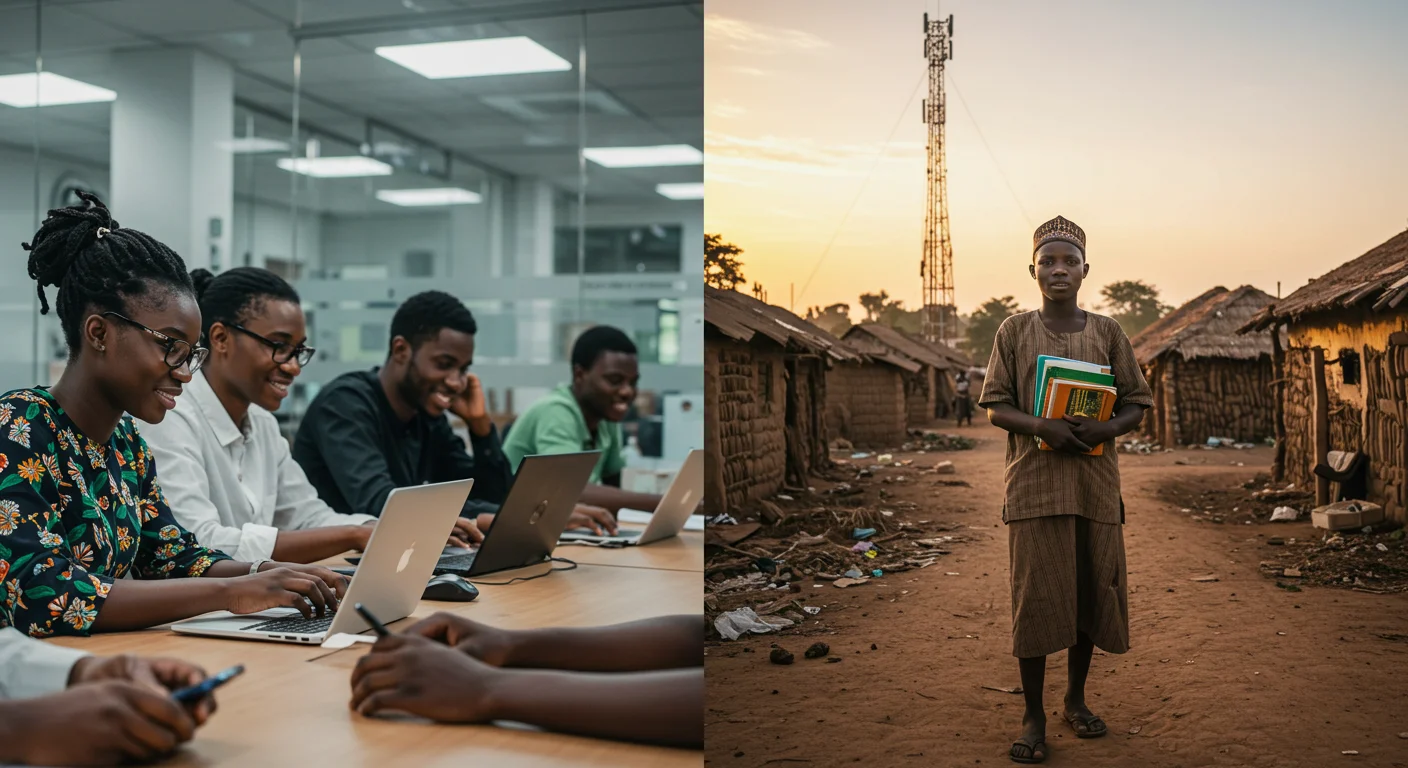
Nigeria's journey toward digital inclusion reflects the broader challenges facing Africa's most populous nation. While the country has emerged as a continental leader in technology innovation, with over 200 million mobile subscriptions and a thriving startup ecosystem valued at over $2 billion, significant portions of the population remain excluded from the digital economy. This exclusion perpetuates existing inequalities and creates new barriers to social and economic participation.
The Scope of Digital Exclusion in Nigeria
Current data from the Nigerian Communications Commission reveals that internet penetration stands at 51.9% nationally, translating to approximately 104 million internet users. However, these figures mask significant disparities across regions, gender, and socioeconomic lines. While states like Lagos boast internet penetration rates exceeding 70%, northern states such as Bauchi and Gombe struggle with penetration rates below 30%.
The gender dimension of this divide is particularly concerning. Despite women representing 49% of Nigeria's population, they account for only 38% of internet users. Rural women face compounded disadvantages, with many lacking both digital literacy and access to mobile devices. Cultural barriers and safety concerns further limit women's participation in digital spaces, perpetuating cycles of exclusion.
Economic Implications of Unequal Access
The Cost of Digital Exclusion
The economic implications of Nigeria's digital divide extend far beyond individual inconvenience. Research conducted by the Nigerian Economic Summit Group estimates that full digital inclusion could add $88 billion to Nigeria's GDP by 2030, representing approximately 15% of the country's current economic output.
Small and medium enterprises (SMEs), which constitute 96% of Nigerian businesses and employ 84% of the workforce, face particular challenges. Many rural-based SMEs cannot access e-commerce platforms, limiting their market reach and growth potential. During the COVID-19 pandemic, businesses with digital capabilities were 2.3 times more likely to survive lockdown restrictions than their offline counterparts.
Infrastructure Challenges: Beyond Urban Centers
The Rural Connectivity Gap
Nigeria's digital infrastructure development has historically favored urban areas, creating a pronounced urban-rural connectivity divide. While fiber optic networks span major cities like Lagos, Abuja, and Port Harcourt, vast rural areas remain unconnected. The cost of extending infrastructure to these areas often deters private sector investment, as telecom operators view rural markets as economically unviable.
The statistics paint a clear picture of this disparity. Urban areas enjoy average internet speeds of 23.8 Mbps, while rural areas struggle with average speeds of 6.2 Mbps. This speed differential affects not just individual users but entire communities, limiting their ability to participate in online education, telemedicine, and e-government services.
Recent initiatives by the Nigerian government, including the National Broadband Plan 2020-2025, aim to achieve 70% broadband penetration by 2025. The plan emphasizes rural connectivity through innovative approaches such as satellite technology and community-driven infrastructure projects.
Educational Technology: Lessons from the Pandemic
The COVID-19 pandemic exposed the educational consequences of digital exclusion with unprecedented clarity. When schools closed nationwide in March 2020, students in well-connected urban areas transitioned to online learning platforms, while millions in rural and underserved communities were effectively locked out of education.
Digital Learning Disparities
A study by the Universal Basic Education Commission found that only 35% of Nigerian students had access to digital learning resources during school closures. The disparity was most pronounced in northern Nigeria, where some states reported access rates below 15%. This "learning poverty" threatens to reverse decades of progress in educational achievement.
Progressive states like Lagos have invested heavily in digital education infrastructure, providing tablets to students and training teachers in digital pedagogy. The Lagos State EdTech initiative, launched in 2019, has reached over 300,000 students and serves as a model for other states.
Healthcare Access in the Digital Age
Digital health technologies offer immense potential for improving healthcare delivery in Nigeria, particularly in underserved areas where physician-to-patient ratios fall far below WHO recommendations. Telemedicine platforms have demonstrated success in connecting rural communities with medical specialists in urban centers, while mobile health applications help manage chronic conditions like diabetes and hypertension.
However, these innovations remain inaccessible to digitally excluded populations. In states like Kebbi and Zamfara, where internet penetration is below 20%, telemedicine initiatives struggle to reach intended beneficiaries. The result is a healthcare system that increasingly favors digitally connected populations.
Innovative Solutions and Community-Driven Approaches
Despite these challenges, innovative solutions are emerging across Nigeria's diverse communities. In Kano State, the Bayero University Technology Incubation Centre has established solar-powered internet hubs in rural communities, providing free Wi-Fi access and digital literacy training.
Mobile Money and Financial Inclusion
Mobile money platforms represent one of Nigeria's most successful digital inclusion stories. Services like Opay, PalmPay, and traditional bank mobile apps have brought financial services to previously unbanked populations. The Central Bank of Nigeria reports that mobile money transactions reached ₦4.2 trillion in 2023, with rural adoption driving much of this growth.
Government Policy and Strategic Interventions
The Nigerian government has recognized digital inclusion as critical to national development, implementing various policies and initiatives to bridge the connectivity gap. The National Digital Economy Policy and Strategy (NDEPS) 2020-2030 outlines comprehensive measures to ensure inclusive digital transformation.
Key government initiatives include the Digital Nigeria Portal, which provides centralized access to government services, and the National Identity Management Commission's efforts to provide digital identity for all Nigerians. The Nigerian Communications Commission has also implemented the Emergency Communications Centers initiative, extending basic connectivity to previously unserved areas.
However, implementation challenges persist. Bureaucratic bottlenecks, insufficient funding, and coordination issues between federal and state governments have slowed progress on some initiatives.
The Path Forward: Collaboration and Innovation
Addressing Nigeria's digital divide requires coordinated action across multiple sectors and stakeholders. Public-private partnerships offer promising avenues for sustainable infrastructure development, while international partnerships can provide technical expertise and funding support.
The success of initiatives like the Google Station project in Lagos, which provided free Wi-Fi in public spaces, demonstrates the potential of collaborative approaches. Similarly, Facebook's Internet.org initiative and Microsoft's Airband program have expanded connectivity in underserved areas.
Community engagement remains crucial for sustainable digital inclusion. Programs that combine infrastructure development with digital literacy training have shown the most success in creating lasting change. Local content development, particularly in Nigerian languages, also plays a vital role in making digital services relevant and accessible.
Nigeria's digital future depends on ensuring that technological progress serves all citizens, not just the privileged few. As the country positions itself as a leader in Africa's digital transformation, it has the opportunity to demonstrate that innovation and inclusion can go hand in hand. Success will require sustained commitment from government, private sector, and civil society, but the potential rewards—economic growth, social development, and human empowerment—make this investment essential for Nigeria's future prosperity.
This analysis is part of CISD's ongoing research into digital inclusion and social development policy in Nigeria. For more insights on technology policy and inclusive development, follow our research updates and policy briefs.
The Centre for Inclusive Social Development (CISD) is a non-profit research and advocacy organisation working to advance inclusive governance, gender and social equity, civic technology, and sustainable livelihoods across Nigeria and sub-Saharan Africa. Through rigorous research, coalition-building, and public-interest storytelling, CISD amplifies the voices of marginalised communities and holds power accountable.
Learn more at cisdnigeria.org or follow us on social media.
How to cite this article
Funso Oyebami. (2025, August 23). Bridging the Digital Divide: Unlocking Nigeria's Potential Through Inclusive Technology Access. CISD Insights. Centre for Inclusive Social Development. Retrieved from https://cisdnigeria.org/article/bridging-the-digital-divide-unlocking-nigerias-potential-through-inclusive-technology-access/.