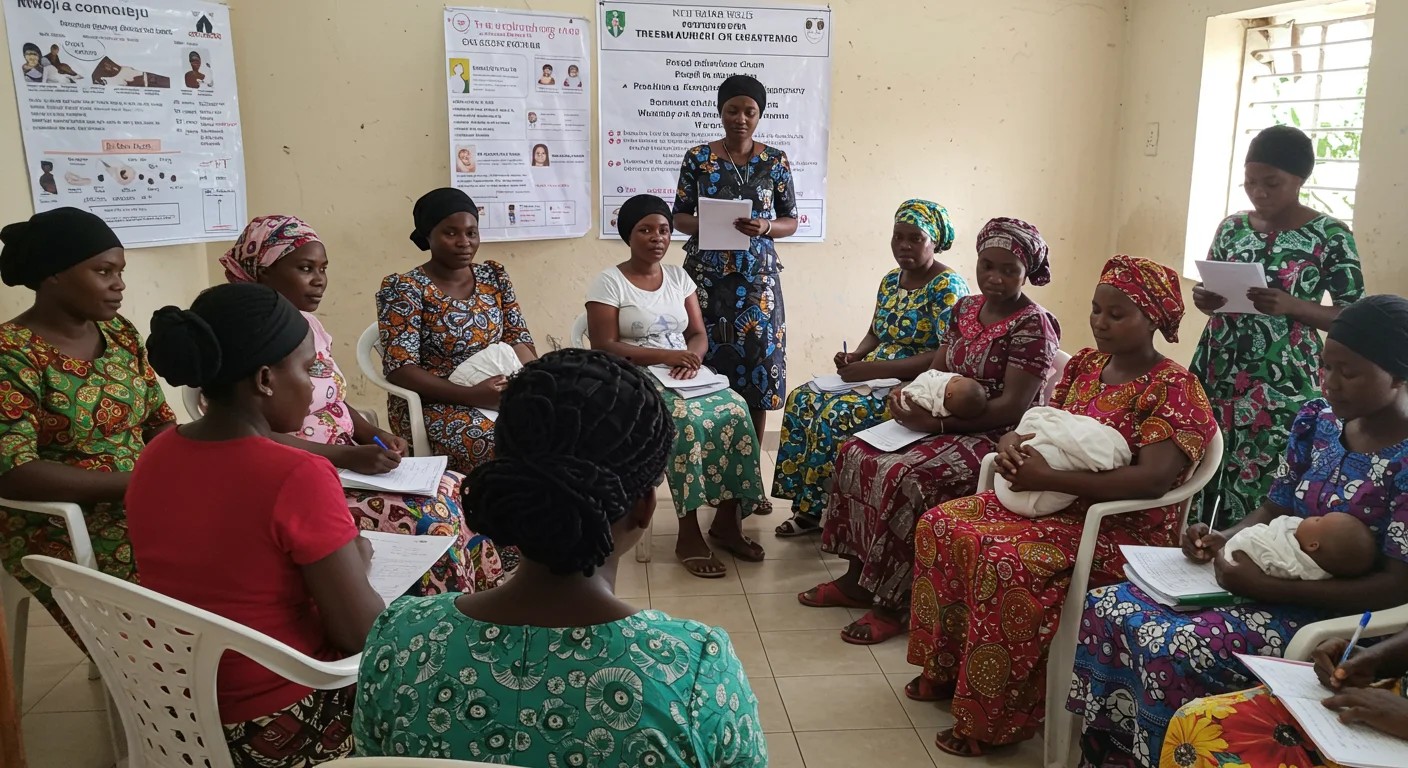
Every year on 11 October, the world marks the International Day of the Girl Child, a day to recognise girls’ rights, confront the barriers they face and renew commitment to their dignity, education and future. The 2026 theme, “End child marriage and invest in girls’ rights!”, is particularly urgent for Nigeria, where too many girls still have their childhoods, schooling and choices curtailed by poverty, harmful norms and unequal opportunities.
For Nigeria, this is not only a gender issue. It is an education issue, a health issue, an economic issue and a national development issue. A country that denies millions of girls the opportunity to complete school, develop skills and make decisions about their own lives cannot fully realise its human-capital potential.
A continuing national challenge
Child marriage remains one of the clearest forms of exclusion faced by Nigerian girls. 33.4 per cent of Nigerian women aged 20–24 were married or in union before age 18. That is about three in ten young women married in childhood. Nigeria is home to more than 24 million child brides. Behind these figures are individual girls whose ambitions are interrupted. A girl who leaves school to marry may lose the chance to gain knowledge, vocational skills, confidence, social networks and economic independence. Early marriage is also closely linked to early childbearing, reduced autonomy and long-term poverty.
The burden is not shared equally. Child marriage is more prevalent among girls from poor households, rural communities, and families with limited access to education. Nearly one-quarter of poor girls aged 15–19 are married, compared with only 2.6 per cent of girls in wealthier households. This inequality shows that child marriage cannot be addressed through public messaging alone; it requires practical investments to reduce the social and economic pressures facing families and girls.
Education is protection
Keeping girls in school, particularly through secondary education, is one of the most effective ways to delay early marriage and broaden their life opportunities. The median age at first marriage is 16.6 years among girls with no education but rises to 21.7 years for those who complete secondary school. Education offers more than certificates: it builds literacy, self-confidence, critical thinking, health knowledge, and the capacity to participate in economic and civic life.
Yet many girls still leave school because their families cannot afford transport, uniforms, learning materials or other indirect costs. In some communities, domestic responsibilities, safety concerns, restrictive gender norms and the belief that girls’ education has limited value compound these financial barriers.
Financial constraints and social expectations significantly affect girls’ school attendance and retention. This confirms an important policy reality: families may value their daughters’ education but still lack the resources and support needed to sustain it. Nigeria should therefore treat girls’ education as a strategic public investment rather than a private family burden. This requires targeted scholarships, safe transportation, school feeding where appropriate, menstrual-health support, sanitation facilities, protection from school-related gender-based violence and pathways for married or pregnant adolescents to return to learning.
Rights before charity
Girls do not need sympathy alone; they need enforceable rights, accessible services and meaningful voice in decisions that affect their lives. Ending child marriage requires communities, traditional institutions, religious leaders, parents, schools, civil-society organisations and government agencies to work together.
The response should include:
- Enforcing laws and policies that protect girls from child marriage and other forms of gender-based violence.
- Ensuring that every girl can complete free, safe and quality basic and secondary education.
- Providing social protection and livelihood support to poor households so that poverty does not force families into harmful choices.
- Expanding adolescent-friendly health information and services, including support that enables girls to make informed decisions about their health and future.
- Engaging men and boys, parents, community leaders and faith leaders to challenge norms that treat girls as dependants rather than rights-holders.
- Supporting safe spaces, mentorship and life-skills programmes that help girls build confidence, leadership and aspirations beyond early marriage.
Such measures must be designed for the girls most at risk: those in rural areas, conflict-affected communities, low-income households, internally displaced populations and areas where school access remains limited.
Investing in girls is national policy
Nigeria’s development ambitions depend on whether girls can learn, lead, work and make choices free from violence and coercion. Girls who complete school are better positioned to participate in the labour force, earn income, contribute to household wellbeing and raise healthier, better-educated children. The benefits extend across generations.
The International Day of the Girl Child should therefore prompt a broader question: what practical investments are governments, communities and households making to ensure that girls can thrive?
Nigeria must move beyond commemorative statements to measurable action. Each state should be able to show progress in girls’ school retention, transition to secondary education, prevention of child marriage, protection services and access to skills and livelihood opportunities. Budgets should include clear, gender-responsive allocations, and data should be disaggregated by sex, age, location, disability, and socioeconomic status so excluded girls are not hidden in national averages.
The choice before us
A girl should not have to choose between school and survival, between safety and silence, or between childhood and marriage. Her future should not be determined by her parents' income, the community in which she is born, or traditions that deny her agency.
On this International Day of the Girl Child, Nigeria should make a clear national commitment: end child marriage, keep every girl learning and invest in the rights that allow her to live with dignity.
When a girl is educated, protected and empowered, she not only transforms her own life. She strengthens her family, her community and the future of the nation.
References
- https://www.unesco.org/en/days/girl-child
- https://www.un.org/en/observances/girl-child-day?_cldee=bs42BG9EOTeedvVgCWj8wGCLWGUrh8LHGYWGpPtxd3A6JTyw79AraQ1QX3RG8dzq&recipientid=contact-5d0dcc394ecdef11b8e96045bde4b578-f9af274a1ae641a6b33736112d095bd2&esid=b4225db9-0099-f011-b41c-7ced8d32de18
- https://data.unwomen.org/country/nigeria
- https://data.unicef.org/wp-content/uploads/cp/child-marriage/Child-marriage-profile_NGA.pdf
- https://www.unicef.org/nigeria/media/10591/file/State-of-Nigerias-Children_Summary-of-the-2024-Updated-SitAn.pdf
- https://www.unicef.org/nigeria/media/10941/file/Report on Reaching and Empowering Adolescent Girls in North West Nigeria.pdf
- https://www.unicef.org/nigeria/press-releases/unicef-and-partners-find-high-economic-returns-investing-adolescent-girls-northern
- https://www.unicef.org/nigeria/media/9261/file/Annual Report 2023.pdf
- https://childmarriagedata.org/country-profiles/nigeria/
- https://www.worldvision.org.uk/campaign/international-day-of-the-girl/
- https://www.twinkl.com/event/international-day-of-the-girl-child-2026
- https://www.un.org/en/civil-society/11-october-international-day-girl-child
- https://www.un.org/en/UN-system/gender-equality?page=33
- https://www.unfpa.org/events/international-day-girl-child-0
The Centre for Inclusive Social Development (CISD) is a non-profit research and advocacy organisation working to advance inclusive governance, gender and social equity, civic technology, and sustainable livelihoods across Nigeria and sub-Saharan Africa. Through rigorous research, coalition-building, and public-interest storytelling, CISD amplifies the voices of marginalised communities and holds power accountable.
Learn more at cisdnigeria.org or follow us on social media.
How to cite this article
CISD. (2026, October 12). A Girl Is Not a Bride: Let Her Learn, Dream and Lead. CISD Insights. Centre for Inclusive Social Development. Retrieved from https://cisdnigeria.org/article/a-girl-is-not-a-bride-let-her-learn-dream-and-lead/.