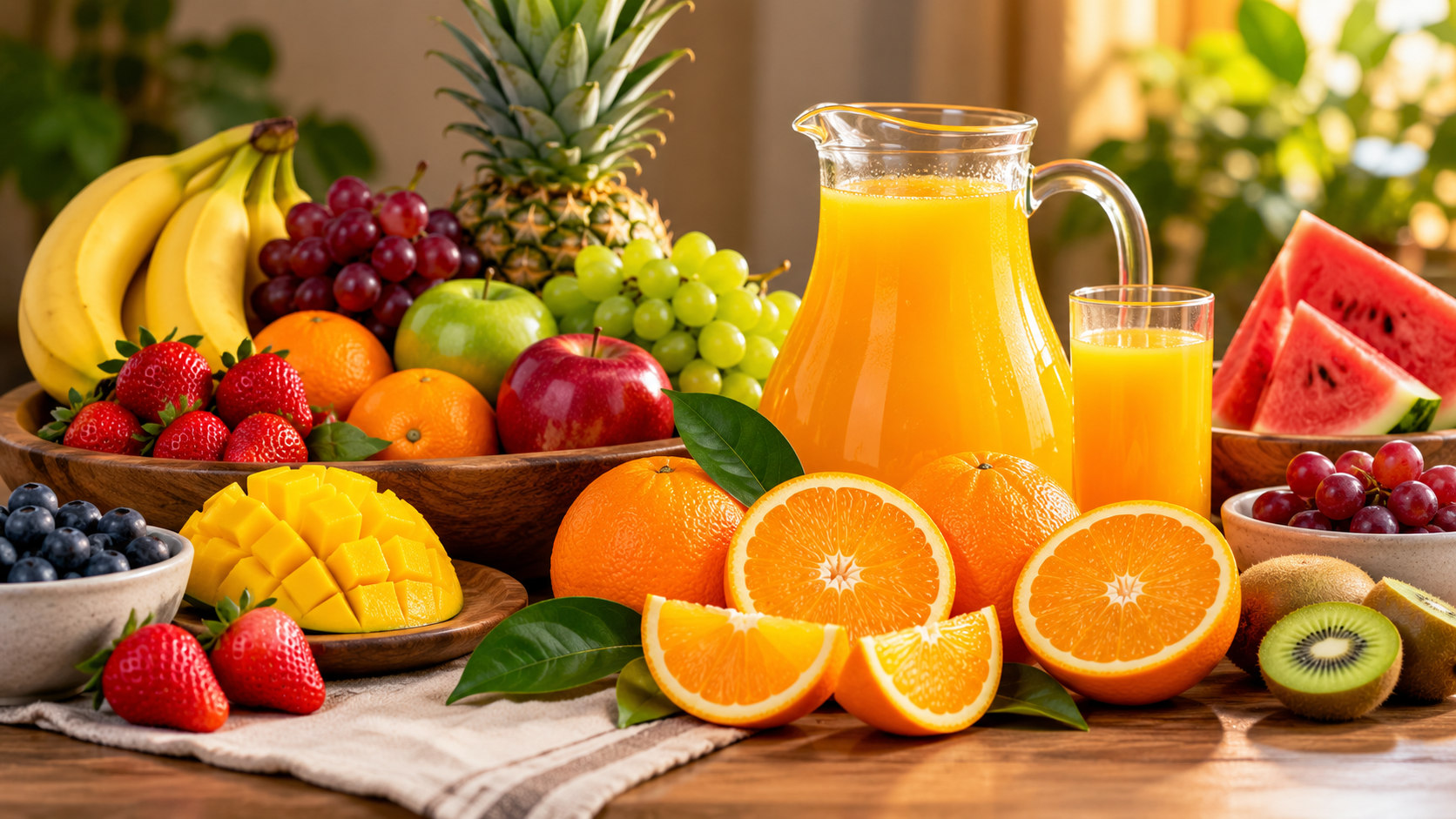
Last week I bought a basket of oranges. My daughter was going back to school, and I wanted to put fresh juice in her lunch box. Not a sachet, not concentrate. Something fresh, something actually good for her.
Then I saw the video.
It was the former Vice President, Prof Yemi Osinbajo, speaking at a gardeners’ seminar in Lagos. He told the story of his wife, Dolapo Osinbajo, who gave up carbonated drinks years ago and switched to freshly made orange juice every day. Then she started having headaches nobody could explain. They took the juice to a laboratory, and the result was the kind of thing none of us ever wants to hear: it was unfit for human consumption.
Those oranges did not come out of a factory. They came from a market. Someone planted them, harvested them, transported them and sold them, and somewhere along the way, something went wrong.
For three days, I kept looking at the oranges I had bought. I just couldn’t bring myself to juice them.
What makes this so frightening is that she did everything we are told to do. Choose whole foods over processed ones. Choose fresh over packaged. Squeeze it yourself. Don’t trust the sachet. Don’t trust the box.
And then the fresh thing turns out to be the poison.
Every option folds back on itself. If I juice the oranges, I might be giving my daughter calcium carbide, or whatever else was sprayed on them to force them to ripen. If I don’t, I’m back to the things I already know I can’t trust: the sachet, the concentrate, the box. And we now know those come with their own long list of adulteration.
Painted apples. Palm oil dyed with azo compounds. Fufu bleached to look fresher. Fake yoghurt packaged in unsanitary conditions. Counterfeit toothpaste made with diethylene glycol instead of glycerine. Paracetamol from what is supposed to be the same manufacturer, but in two different colours depending on which packet you pick up.
This isn’t one bad product on one bad shelf. It is the everyday shopping list of an ordinary Nigerian.
For a long time, the middle class in this country has been telling itself a comforting story. If I shop at the expensive supermarket, buy the branded product, stay away from the open market and pay a little extra, my family will be safe.
The story is comforting because it tells us that money is a wall.
But that painted apple was priced for the middle class. So was the counterfeit yoghurt. So was the toothpaste. Your class doesn’t protect you. It just means you paid more to be harmed in nicer packaging.
The poor eat what they can afford. The middle class eat what they trust. In this economy, neither of them is safe.
“Merchants of Death”
Last week, the Director General of NAFDAC, Professor Mojisola Adeyeye, held a press conference in Lagos and called counterfeiters “merchants of death.” She is right. Diethylene glycol used in place of glycerine has killed children before, in more than one country. Palm oil laced with industrial dye damages the liver. Calcium carbide has been linked to cancer. Doctors are already seeing what comes after: more liver failure, more kidney failure, more infertility.
“Merchants of death” is exactly the right phrase. But words like that need to be matched by real urgency from the institutions saying them.
Prof Adeyeye also confirmed that products worth more than 1.5 trillion naira have been seized or destroyed since 2023. Between May and July this year alone, 6,233 facilities were inspected and 7,210 fake, falsified or substandard products were taken out of circulation. There have been sixty-four convictions, with sentences of one to seven years and no option of a fine. Those are real numbers, and they reflect real work.
But she also admitted two things that need to be said plainly. First, NAFDAC does not have direct and absolute regulatory oversight over unbranded palm oil, fufu and other staples traditionally sold in open markets. That is the food most Nigerians eat.
Second, counterfeiters are not ghosts. They are, in her words, within our communities, neighbourhoods and business premises.
Both things are true, and put together, they point to a gap. The harm is greatest exactly where the agency’s reach is weakest, and the people left to fill that gap are the shoppers themselves.
Then a journalist stood up and asked her when she would resign over the state of the country’s food supply.
She burst out laughing.
Somewhere in this country, around the time that laugh was recorded, a mother was pouring what she thought was palm oil into a pot for her children’s dinner. Somewhere, a father was buying paracetamol for a fever that wouldn’t go down. Somewhere, a woman was squeezing an orange for a child she loves. None of them was laughing. None of them knew for sure whether what they were holding was what it claimed to be.
That not-knowing wears you out in a particular way. Every Nigerian mother I know carries it around in her chest. It costs money, it costs sleep, and it takes away the small, ordinary comfort of trusting what’s in your own kitchen.
That journalist’s question was not a joke. It carried the bottled-up grief of a country that has watched liver failure, kidney failure and infertility become quiet, almost expected diagnoses. It was Dolapo Osinbajo’s headaches. It was my basket of oranges. It was every parent who has stood in a supermarket aisle turning a bottle over and over, reading a label they no longer believe.
I’m not calling for anyone to resign. That’s not my place, and it isn’t the point. The point is that people heard that laugh, and they heard it for what it was: a small sound made in the wrong room. That room held a public that has spent years asking what is being done. The laugh was the answer, and the answer seemed to be that the question was funny.
It isn’t funny. It never has been. It is the sound a country makes when the people paid to guard the table have started putting on a show instead.
Until the system starts working, we have to be the system. It’s a tax on parents, and it’s unfair. But right now, it’s the reality.
So buy whole foods where you can. Buy from sellers you know by name and can go back to. Wash fruit in salt or vinegar water; it won’t remove everything, but it cuts down what sits on the skin. Be wary of apples with uneven colour, or a waxy shine that looks painted rather than polished. Be wary of palm oil that leaves the wrong shade of red on a white plate. Remember that sachet alcohol, and alcohol in PET bottles under 200ml, have been banned since January, so any shop still selling them is telling you something about everything else on its shelves. And report to NAFDAC, through the call centre or any of its offices, even when it feels pointless. The agency says it gets just over two hundred complaints a month. In a country of more than two hundred million people, that isn’t vigilance. That’s silence.
But here is the harder truth. Personal vigilance is not a food policy. It is unpaid regulatory work, done mostly by women, because the agencies funded to do it are not working at the scale the problem demands.
I threw the oranges away.
That’s what I ended up doing. I couldn’t verify them, and I wasn’t willing to gamble with my daughter’s health, so I took the loss and bought watermelon instead, praying it had at least been left to ripen on its own. I know many mothers can’t afford to throw money away the way I did.
And that is the real shape of this crisis. The mother who has a little to spare panics and throws her basket away. The mother who has nothing to spare juices the oranges anyway, because there is nothing else in the house and the child has to eat. A country where even the comfortable can’t trust their food is a country where the poor are being quietly harmed while everyone above them argues about a press conference.
The Director General is right: counterfeiters are not ghosts. But neither are the rest of us. We are right here, standing at our kitchen counters, holding baskets we are afraid of.
A country cannot raise its future on food it will not guard.
The Centre for Inclusive Social Development (CISD) is a non-profit research and advocacy organisation working to advance inclusive governance, gender and social equity, civic technology, and sustainable livelihoods across Nigeria and sub-Saharan Africa. Through rigorous research, coalition-building, and public-interest storytelling, CISD amplifies the voices of marginalised communities and holds power accountable.
Learn more at cisdnigeria.org or follow us on social media.
How to cite this article
Chisom Okoli. (2026, October 6). A Country That Cannot Guard Its Own Table. CISD Insights. Centre for Inclusive Social Development. Retrieved from https://cisdnigeria.org/article/a-country-that-cannot-guard-its-own-table/.