Plateau State’s violence is often reduced to phrases like “farmer-herder conflict” or “Christian genocide.” But in the villages around Bassa LGA, the reality feels more deliberate and more disturbing: coordinated attacks preceded by warning calls, carried out with impunity, and met by a government inheriting the same fire its predecessors failed to extinguish.
The Question That Shouldn’t Need Asking
On Friday, May 8, I told Seun and Henry I had an assignment in Miango — to interview families displaced by recent attacks. They wanted to come along.
Then Seun asked: “Have you made security arrangements?”
The question lingered in the air like smoke.
Living in Jos, relatively untouched by the violence, I had gradually stopped thinking about the dangers faced by those living just outside the city.
So I made the calls. Security was arranged. The crew, the armed escorts, my two friends, and relief materials from the Centre for Inclusive Social Development (CISD) were packed into the vehicles, and we set out.
Bitrus Nuhu Nga was my guide. We had never met before, though for years he had fed me stories from Bassa LGA. Early Saturday morning, he called to confirm we were still coming.
The Drive
The security men talked shop on the road. State failure, office politics, the familiar bitterness that surfaces when armed men discuss the country they are paid to defend.
We arrived at Miango Rest Home. From there, Nuhu directed us to ECWA Church Bishara 1, Miango, where two families were already waiting: those of Wuh Huru and Monday Chuku.
The night before we arrived, May 8, the alleged Fulani militia had attacked Ngbra-Zongo village in Bassa LGA, killing eleven people: pregnant women, children, and the elderly. Ten others survived gunshots and machete wounds. It was one attack among many.
The village was still too dangerous to enter. We could only see it from a distance. Close enough to feel the silence, far enough to stay alive.
“Like Moses in the Bible,” I joked. Except this mountain was off-limits for reasons no one could laugh about.
Baba Wuh Huru
He began with his name. Then the year: 2017.
Three of his children were killed. Grandchildren were left behind.
Now in his eighties, frail and exhausted, Baba Wuh Huru wiped his eyes as he spoke.
They had lived quietly, he said. His village, Nkiedonwro, shared no boundary with any Fulani settlement. There had been no quarrel, no dispute he could point to. Then one day armed men arrived, and afterwards there was nothing left. No home, no farmland, no explanation that made sense to him.
His hands trembled when he spoke about the government. They trembled even more when he spoke about his village.
The grandchildren sat nearby, watching him tell the story. No one looked away.
Mr Monday’s Phone Call
Monday Chuku was younger. Before the attacks, he had been a thriving farmer with cattle, goats, pigs, and crops. His village, Jiri, he claimed, was more than three hundred years old.
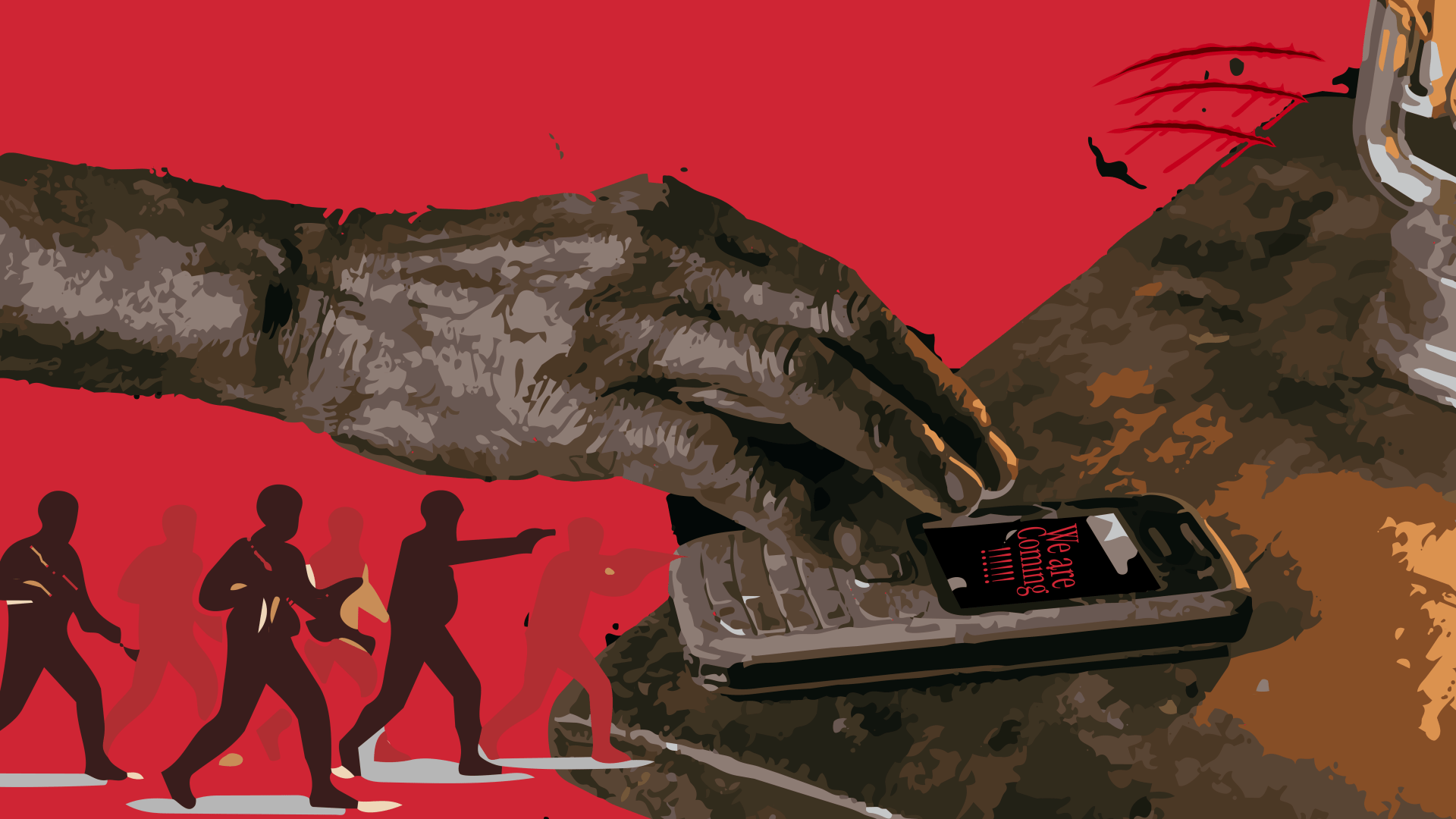
The phone call came before the attack.
The assailants had taken his father.
If you are man enough, come and get him, they said.
He could not.
They killed the old man. Then two other members of the family were killed as well.
Now he survives on handouts in a place where he once harvested abundance.
What stayed with me was this: both families said the attackers gave notice. Monday received a call. Huru’s community already knew something was coming.
The violence was not spontaneous. It was anticipated. Almost scheduled, like an appointment everyone feared but no one could stop.
And afterwards came the same thing that always follows: nothing. No arrests. No consequences. No lasting intervention.
We inherited suspicion
Nuhu wanted to show us another village. “Twenty minutes,” he said.
I believed him.
We hired a larger van and continued. The road stretched through cabbage farms, abandoned compounds, and widening emptiness. At one point, we passed a destroyed farm.
“Herders,” Nuhu said. “Their signature.”
Twenty minutes became forty. Then fifty.
We saw cattle before we saw the herders. Then we noticed the herders watching us. The moment they spotted our vehicles, they moved. Coordinated, immediate, disappearing into the hills.
My stomach tightened.
We have security, I told myself.
Then another thought followed immediately: Security against what? Against how many?
Eventually, we arrived at what remained of a village once home to seven hundred households.
Now there was only ash, collapsed walls, and an abandoned well.
The herders appeared again on a distant ridgeline, watching us.
Maybe they meant no harm. Maybe they did.
I could no longer tell, and that uncertainty felt like its own kind of violence.
I thought about how communities once shared language with them, traded dairy products, bought meat, exchanged words and customs. My generation barely remembers that reality. We inherited suspicion fully formed, like a debt we never agreed to owe.
The Silence on the Way Home
No one spoke during the drive back.
Seun stared through the window. Henry scrolled through his phone without really seeing it. The security men sat with rifles resting between their knees, perhaps thinking whatever armed men think when the danger has passed, but not really passed.
I had asked grieving people to reopen wounds for a camera and a microphone.
They did.
Now I carried those stories with me: the trembling eighty-year-old grandfather, the farmer reduced to dependency, the village surviving only in memory and smoke.
What Mr Monday Said
He spoke in Irigwe. Nuhu translated.
“If two children are fighting,” he said, “parents can separate them. Or they can identify the child causing the trouble and deal with him.”
Simple. Brutal in its clarity.
Until someone decides who the aggressors are and acts accordingly, the children will keep bleeding.
The Cancer Spreads
Caleb Mutfwang, the executive governor of Plateau state, inherited this crisis, just as Joshua Dariye, Jonah Jang, and Simon Lalong did before him. Each administration faced its own version of Plateau’s violence.
But this one feels metastasised.
From September 7, 2001, a religious crisis led to cycles of militia attacks, reprisals, kidnappings, and banditry. Old hatreds now wear new masks. Communities distrust one another more deeply than before. Security personnel are sometimes accused of complicity. Government responses often appear paralysed.
The fragile peace Jos once learned to live with has cracked open again.
What We Carried Back
Raw footage.
And the weight of stories that refuse to leave.
These are only a few villages in one LGA. Yet Nigeria bleeds from every direction — Barkin Ladi, Riyom, Bokkos, Faan, Mangu.
The dead become statistics.
The survivors become talking points.
The talking becomes rhetoric.
And the rhetoric becomes nothing.
The road to Miango is paved with good assignments.
So far, it leads nowhere.
The Centre for Inclusive Social Development (CISD) is a non-profit research and advocacy organisation working to advance inclusive governance, gender and social equity, civic technology, and sustainable livelihoods across Nigeria and sub-Saharan Africa. Through rigorous research, coalition-building, and public-interest storytelling, CISD amplifies the voices of marginalised communities and holds power accountable.
Learn more at cisdnigeria.org or follow us on social media.
How to cite this article
Idoko Salihu. (2026, June 3). They Gave Notice Before They Killed: This is a firsthand account from the road to Miango.. CISD Insights. Centre for Inclusive Social Development. Retrieved from https://cisdnigeria.org/article/they-gave-notice-before-they-killed/.