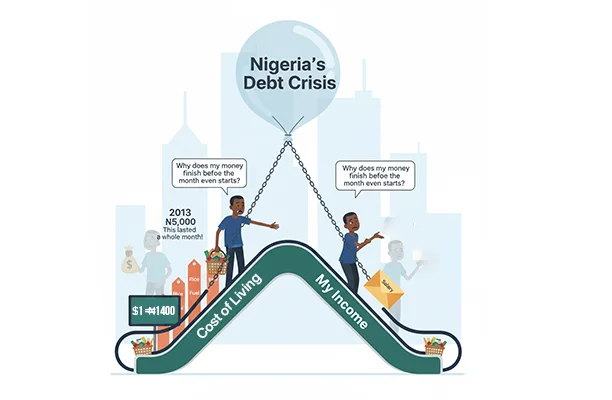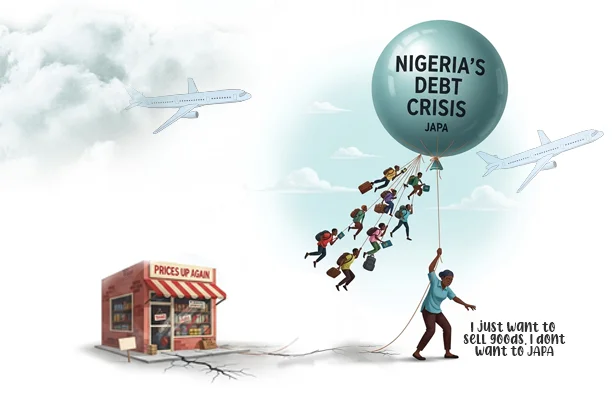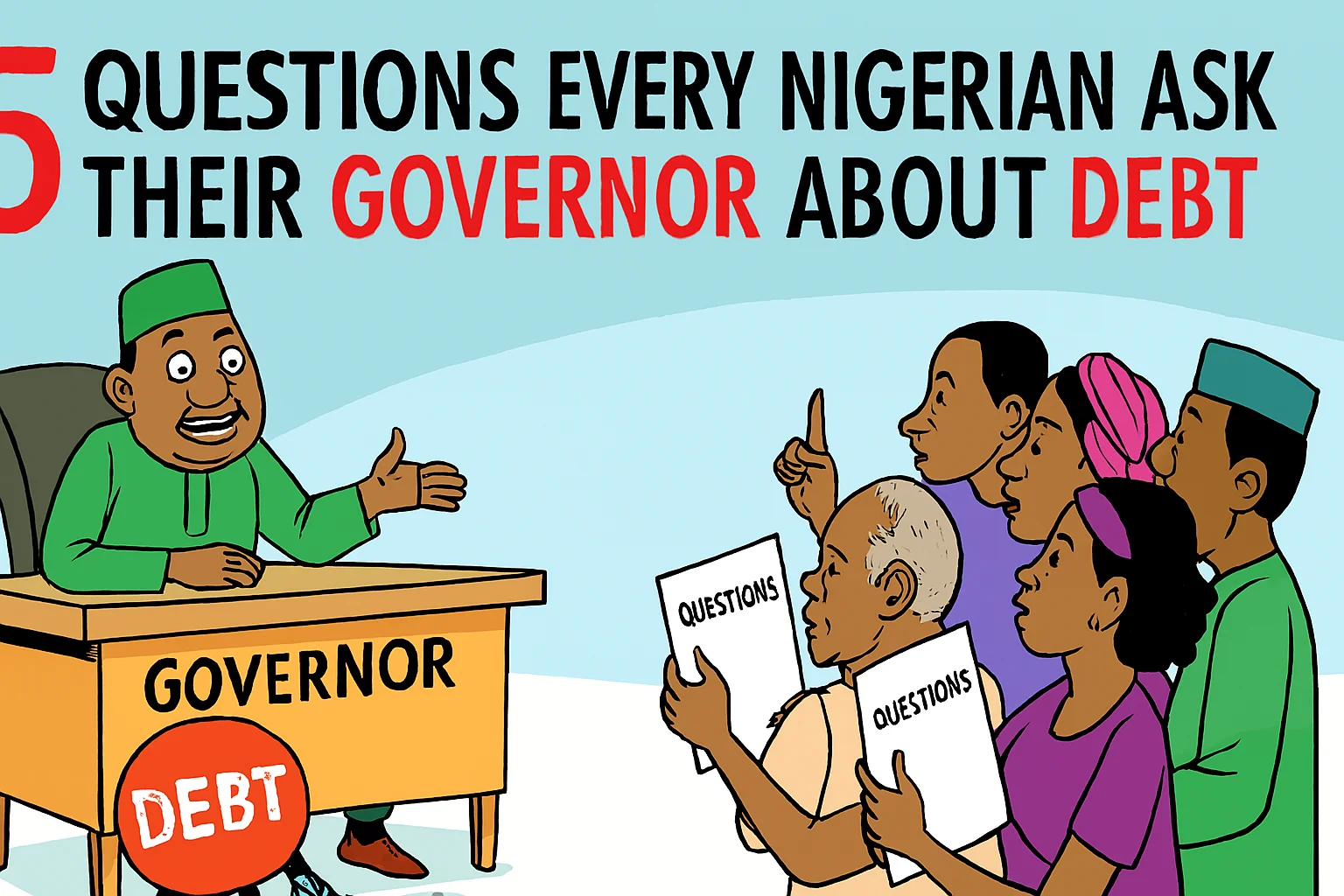
The first indication that Nigeria may not adequately support the aspirations of its youth becomes evident when examining the structural inefficiencies of the country’s governance and economic systems. Many young Nigerians engage in various entrepreneurial activities, including digital businesses and content creation, as a response to limited institutional support and scarce opportunities. This situation is particularly pronounced in the context of public debt, which has significantly constrained resources that could otherwise support education, healthcare, and youth development programs. The allocation of financial resources is heavily influenced by debt servicing, limiting the ability of the government to invest in critical sectors that foster national development.
By 2024, Nigeria’s public debt had surpassed ₦121 trillion, an amount equivalent to approximately ₦6,250 owed per household per day. This level of debt represents a substantial financial obligation that restricts public expenditure on social and economic development. The persistent servicing of interest on debt reduces the funds available for public investment, thereby constraining the creation of employment opportunities and limiting access to essential services. As a result, the economic environment for young Nigerians is characterized by restricted opportunities and increased financial uncertainty, which affects long-term career planning and entrepreneurial activities.
Nigeria’s current debt crisis is the result of a gradual accumulation of financial obligations. Loans that were initially intended as temporary solutions have become long-term liabilities, and some off-balance-sheet obligations were later integrated into official debt records. Inefficiencies in financial oversight, lack of strategic planning, and policy inconsistencies have contributed to the accumulation of debt, while the youth bear the consequences without having participated in these fiscal decisions.
The effect of rising debt on national development is particularly significant for the younger population. Debt obligations divert resources away from potential investments in infrastructure, education, healthcare, and job creation. Consequently, young Nigerians face structural barriers to achieving career and entrepreneurial goals. High debt levels limit public sector capacity to generate employment, fund youth-focused programs, and support private sector initiatives. The result is an environment where ambition is constrained by systemic financial limitations, reducing the capacity for socio-economic mobility and innovation among young people.
For Generation Z in Nigeria, the implications of public debt are particularly acute. This cohort is highly educated, technologically connected, and globally aware, yet constrained by domestic economic conditions. The combination of high unemployment, limited public investment, and structural inefficiencies encourages migration as a coping strategy. While mobility may serve as an individual strategy for career advancement, it reflects broader systemic challenges where the state is unable to provide sufficient opportunities for its youth.
In summary, Nigeria’s high levels of public debt have significant implications for national development and the prospects of its younger population. The diversion of financial resources to debt servicing limits public investment, reduces opportunities for employment and entrepreneurship, and constrains youth development initiatives. Addressing these structural and fiscal challenges is essential to creating an environment in which the ambitions of young Nigerians can be realized and sustained.