My friend runs a chain of small shops and used to make over ₦300,000 every week. A few years ago, business was good; customers came regularly, she stocked her shelves with ease, and profits were steady. But everything changed recently. Now, customers rarely walk in, and the prices of goods rise so quickly that what she buys today is already more expensive by the next market day.
She closed down three of her shop outlets, leaving only two remaining. She can no longer afford to buy goods in bulk because the money that used to fill her store now buys only a fraction of what it once did. Her shelves stay half-empty, customers complain about high prices, and many simply walk away. Week after week, her profit shrinks, her stress grows, and her hope for stability fades.
After months of struggling, she finally gave up waiting for things to get better. This year, she made a decision, and she is leaving Nigeria with her family. A woman who once built her business with pride now feels she must escape the same economy that once sustained her.
If things were normal, leaving might have never crossed her mind. Her story is not unique. It is the quiet reality for many Nigerians, who watch their dreams shrink under the weight of rising prices, falling demand, and an economy that no longer supports the effort they put in every day.
Her story is personal, but it is also national. Many of the pressures pushing her out are rooted in the same economic forces affecting millions across the country.
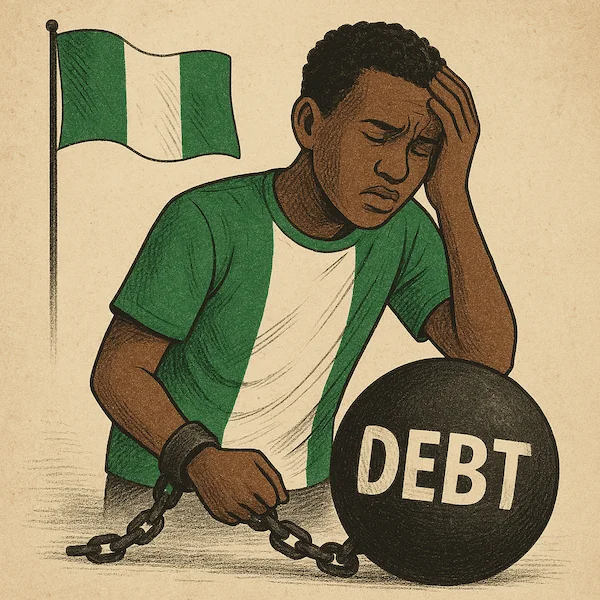
And one of the biggest reasons is the country’s growing debt.
For years, Nigeria's debt grew far faster than its revenue, creating a gap that the government filled with even more borrowing. According to the 2024 Budget Implementation Report, 60% of the Federal Government’s revenue goes into servicing debt. The government is left with crumbs, and the rest of the economy feels the pressure.
This pressure shows up in everyday life, not in government reports.
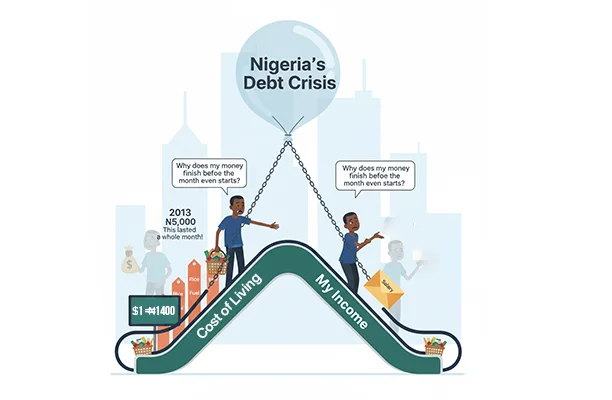
It shows up when the currency loses value. It shows up when importers raise prices every week. It shows up when businesses can’t plan beyond tomorrow. It shows up when salaries stand still, but living costs sprint ahead. It shows up when a trader making ₦300,000 weekly still feels like she is drowning.
As debt increased, the naira fell. A weak currency makes everything expensive, especially in a country that imports more than it produces. According to the National Bureau of Statistics (NBS), food inflation climbed above 39% in October 2024, while general inflation crossed 33%; figures that reflect the harsh reality families face daily.
This is how a country loses its people, not because they hate their country, but because their country makes survival a daily battle.
What is tragic is that Nigerians are not lazy, not unwilling, not hopeless; they are simply tired. Tired of working hard and still sinking, planning a future that inflation destroys every month, and paying the price for economic choices they never made.
My friend is not leaving because she failed. She is leaving because the system failed her.
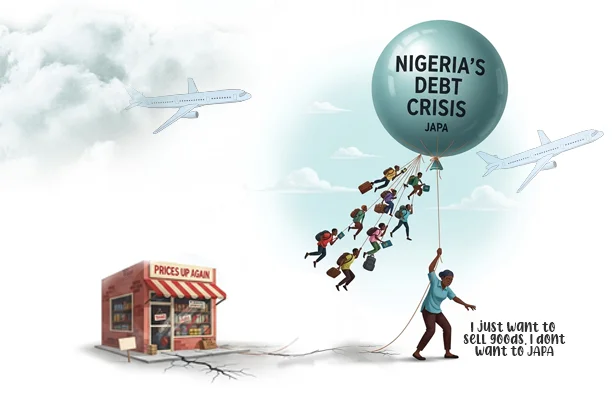
And that is why JAPA is not just a trend; it is a quiet verdict on an economy that has stopped rewarding effort.
National debt may sound like a distant policy issue, but it is shaping the lives of millions. It is shrinking purchasing power, destabilising currencies, starving businesses, pushing up prices, and forcing talented Nigerians to choose between staying loyal to the country they love or fleeing to other countries where the economy is stable and their efforts are rewarded.
If Nigeria wants its people to stay, it must rebuild trust in the economy. It must borrow responsibly, invest strategically, stabilise the currency, and create an environment where effort is rewarded, not wasted.
Currently, the question on many young Nigerians’ minds is not “How do I succeed here?”
It is: “How much longer can I endure this?”