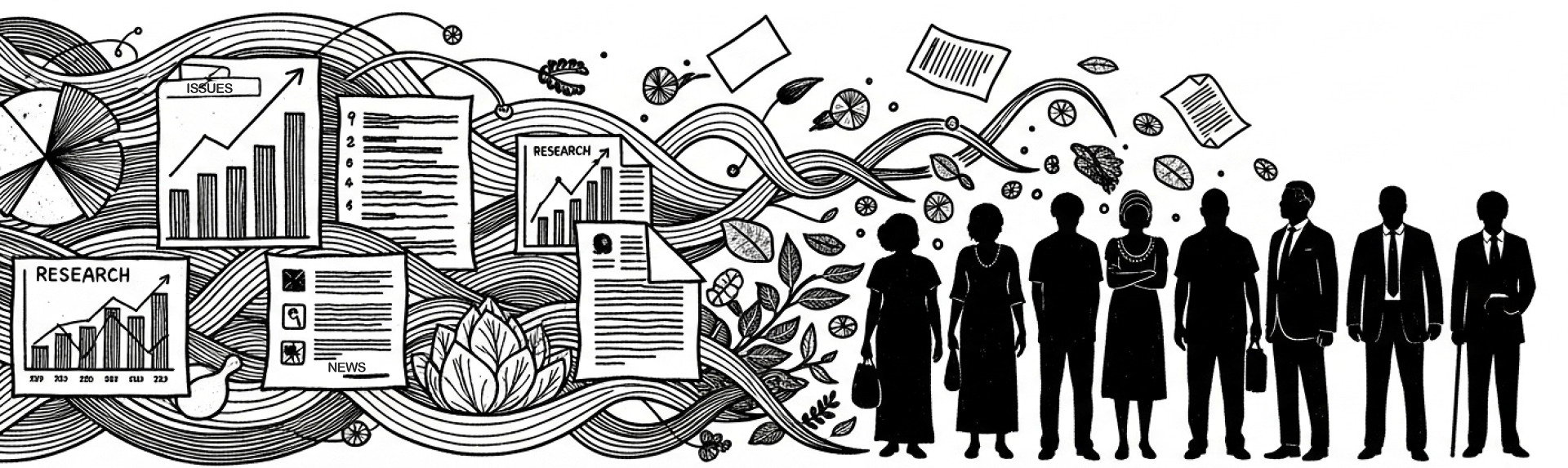
The Center for Inclusive Social Development (registered as Michaella Center for Social and Inclusive Development Initiative, RC: 185693) is a non-profit policy research and advocacy organisation based in Abuja, Nigeria, developing evidence-based solutions to advance social change.
We use behavioural research, data, and evidence to advocate for reviewing existing policies, developing new ones, and implementing innovations that enable individuals, communities, and governments to achieve their goals and contribute to sustainable development.
A society where everyone has equal access to quality healthcare, education, livelihood, and opportunities for civic engagement. We envision a community, state, country, and continent that promotes gender equality and social inclusiveness and empowers marginalised groups.
To empower citizens, engage governments across all levels, and foster sustainable development through a holistic approach that addresses key areas: health, education, livelihood, governance and civic participation, gender and social inclusion, and tax justice.
We develop creative, context-appropriate solutions rather than importing frameworks that don't fit local realities.
We centre equity in everything we do, prioritising the voices and needs of those historically excluded from decision-making.
We believe lasting change happens through coalitions—working alongside citizens' groups, civil society, communities, governments, donors, and businesses.
We measure what works, learn from what doesn't, and adapt our approaches based on evidence.
We focus on education and health reforms that improve individuals' skills, knowledge, and well-being, while supporting sustainable economic opportunities—especially for marginalised groups—through agriculture, entrepreneurship, and vocational skills training.
We promote citizen engagement in governance processes, advocate for transparency and accountability in decision-making, work to improve electoral processes, and champion tax justice—advocating for fair tax policies that promote equity and support the common good, particularly for underserved communities.
We work to ensure transparent and accountable management of natural resources, advocating for policies that support sustainability and equitable benefit-sharing. We promote environmentally sustainable practices that address climate change and its impact on communities.
We advocate for policies that address gender-specific barriers and focus on the inclusion of marginalised groups—women, youth, persons with disabilities, and rural communities—in governance, development, and economic processes, ensuring no one is left behind.
We apply behavioural science to governance and development challenges through a structured methodology:
Rapid, thorough assessments to identify common behavioural barriers and corresponding solutions.
Primary and secondary research to analyse specific barriers driving poor outcomes.
Building science-based solutions, from prototypes and user testing to engineering at scale for specific problems or whole processes, programmes, and products.
Measuring what works through impact evaluation, rapid A/B tests, and data analysis.
Collaborative learning, interactive masterclasses, coaching, and tailored plans for leaders setting up behavioural science approaches within their organisations.
We partner with citizens' groups, donors, civil society organisations, communities and movements, government at all levels, and businesses. Our work bridges the gap between these stakeholders—translating citizen priorities into policy language and making government processes legible to the people they serve.